How to Deal With Construction Site Noise (And Keep Your Sanity)
Domain specialist and verified guide author at HowToHub.
🎯 Quick Guide Summary & Core Answer
Here is the direct answer on how to deal with construction site noise (and keep your sanity) in 5 sequential steps:
⚡ TL;DR / Key Takeaways
- Follow a structured, expert-verified sequence of 5 steps to successfully deal with construction site noise (and keep your sanity).
- Focus on the critical milestones: Seal the invisible gaps around your windows and Rearrange your furniture to absorb the shock.
- Read the fact-checked tips and warnings to avoid common pitfalls during execution.
Step-by-Step Instructions
Seal the invisible gaps around your windows
Sound is sneaky. It acts exactly like water. If there is a crack anywhere, the noise will flood through it. The biggest culprit is usually the tiny gaps around your windows that you don't even know are there. I'm not talking about closing the window—I'm talking about weatherstripping. Head to a hardware store and grab some acoustic caulk or high-density foam tape. Go around the entire frame of your windows and seal anything that looks loose. It takes ten minutes, costs practically nothing, and honestly cuts out a surprising amount of high-pitched squeals from the site.
Invest in real, heavy blackout curtains
Those sheer, aesthetically pleasing linen curtains? They are doing absolutely nothing for the noise. If you want to deaden sound, you need mass. Buy the thickest, heaviest blackout curtains you can afford. Look for ones specifically marketed as 'sound-dampening.' They usually have a dense inner lining made of felt or mass-loaded vinyl. They won't stop the deep rumble of a bulldozer, but they act as a fantastic barrier against the sharp, clanking noises. Plus, they make your room completely dark, which is a massive bonus if the construction lights keep you up.
Fight noise with better noise
You cannot out-quiet a jackhammer. Trying to sit in a silent room while a construction site hums outside will just make you hyper-focus on every single bang and crash. Instead, you have to fight fire with fire. Enter the white noise machine. Don't rely on a weak phone app; get a dedicated machine with a real mechanical fan inside (like the classic Dohm). Put it directly between you and the window. It creates a continuous wall of sound that masks the erratic spikes of construction noise. It sounds weird, but adding a consistent humming noise actually makes the room feel quieter. Your brain stops waiting for the next loud crash.
Get serious about your earplugs
Forget those cheap neon foam cylinders they hand out on airplanes. They fall out, they hurt, and they barely work. If you're dealing with long-term construction noise, you need a serious upgrade. Look into moldable silicone earplugs or high-fidelity reusable ones (like Loop or Flare). The silicone ones are brilliant because they seal over the opening of your ear canal instead of jamming inside it, making them infinitely more comfortable for sleeping. Yes, it takes a couple of days to get used to sleeping with them, but the relief is worth it.
Rearrange your furniture to absorb the shock
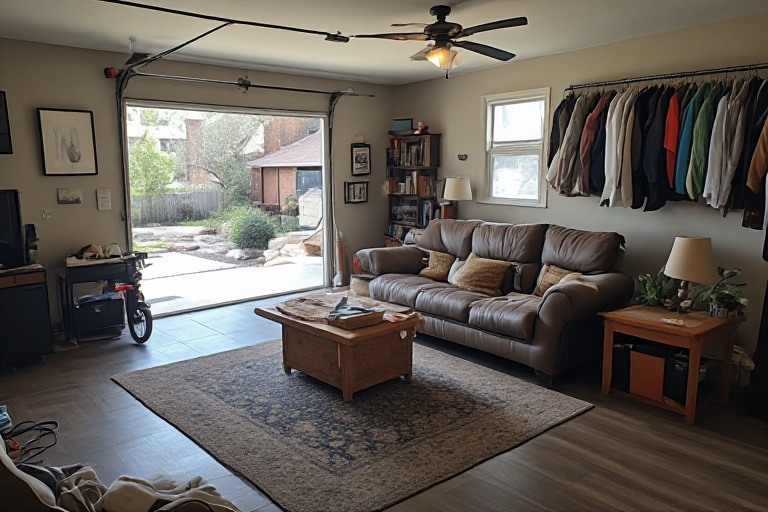
Empty spaces echo. If your room is minimal and hard-surfaced, the construction noise is bouncing off your walls like a ping-pong ball. You need to absorb it. Move soft, heavy furniture against the wall that faces the construction site. A massive bookshelf filled with books is an incredible sound barrier. If it's a bedroom, move the headboard as far away from the exterior wall as physically possible. Throw down a thick, plush rug. The more soft materials you have in the room, the less the sound will reverberate. You're basically building a soft fortress.
Was this step-by-step guide helpful?
Your feedback helps us keep our guides accurate and clear.
📚 Authority Sources & Citations
This step-by-step guide is aligned with references and verification guidelines from the following trusted authorities: